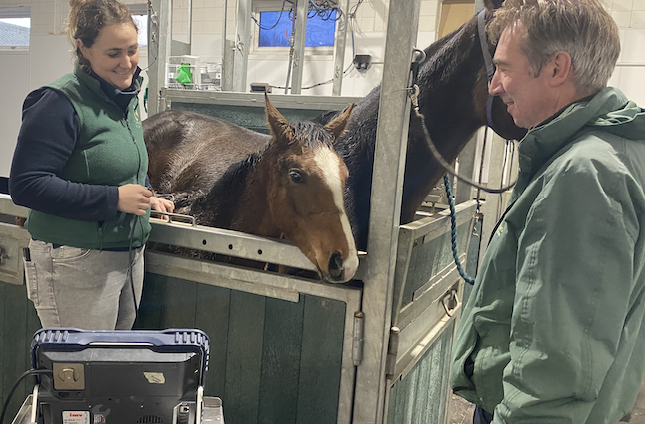
At Twemlows, we routinely perform lung ultrasound examinations on foals to help detect pneumonia before obvious clinical signs develop. Regular screening provides our veterinary team with valuable information about respiratory health and allows us to identify and monitor changes within the lungs.
One of the challenges with respiratory disease in foals is that appearances do not always tell the whole story. Many affected foals remain bright and healthy despite having significant lung lesions. Routine lung scanning therefore allows us to identify disease early and monitor its progression.
What Are We Looking For?
Rhodococcus equi is one of the most common causes of pneumonia in foals. Lung ultrasound allows our veterinary team to identify lesions within the lungs and monitor how these change over time.
Importantly, ultrasound alone cannot confirm which bacteria are responsible. Other bacteria can cause similar lung lesions but may require different medications, so further diagnostic testing can be important when deciding on the most appropriate treatment.
What Happens if We Find Lung Lesions?
Whenever possible, we perform a transtracheal wash (TTW) to collect a sample from the lower airways for laboratory testing. This helps us to confirm the diagnosis and select the most appropriate antibiotic treatment for the individual foal.
Treatment for Rhodococcus equi can involve several weeks of antibiotics, alongside regular repeat scans to monitor recovery. Continued scanning allows our veterinary team to follow the progression of the lung lesions and helps to guide further treatment decisions.
Supporting Responsible Antibiotic Use
The antibiotics used to treat Rhodococcus equi are important medications and have potential side effects. For this reason, we aim to use them only when necessary and ensure that treatment is targeted to the individual foal.
Combining routine ultrasound screening with laboratory testing where appropriate helps us to make informed treatment decisions. Regular repeat scans can then be used to monitor recovery and assess whether lesions are resolving.
Continuing Care at Home
For foals leaving Twemlows with a history of lung lesions or ongoing monitoring requirements, we recommend discussing follow-up lung scans with their own veterinary surgeon.
Continued monitoring at home can be valuable in ensuring that lesions are resolving and helping to guide any further treatment decisions. If further information is required, the Twemlows team is always happy to discuss previous scans and management plans with the veterinary surgeon caring for the foal at home.
A Solid Start
Routine lung scanning provides us with an opportunity to identify respiratory disease in foals before obvious clinical signs develop, including in foals that otherwise appear bright and healthy.
By combining ultrasound screening with laboratory testing where appropriate, we can provide targeted treatment, promote responsible antibiotic use and monitor recovery over time. Ultimately, this approach allows us to give each foal a solid chance of a full recovery.