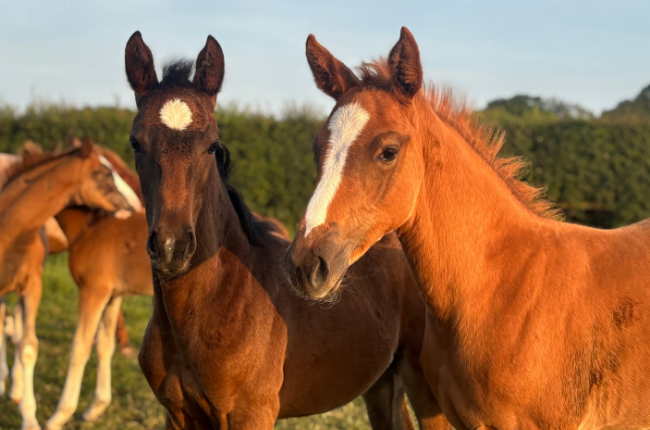
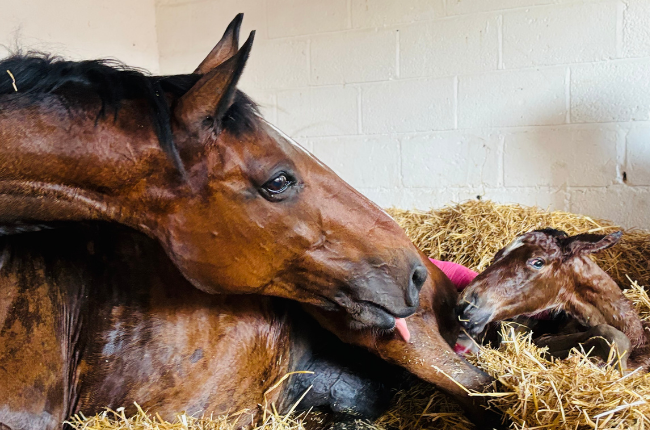
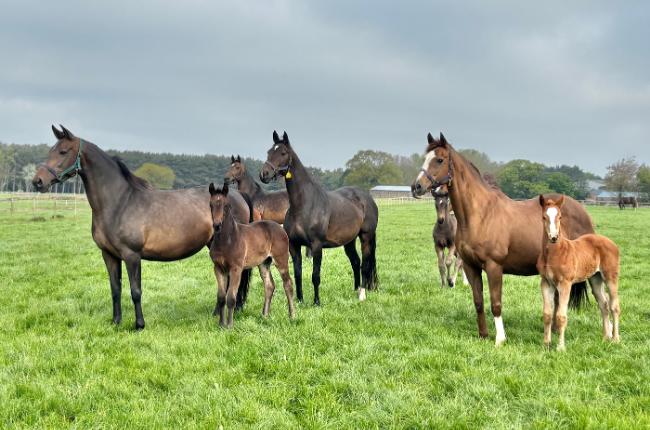
Twemlows is pleased to support the future of equine breeding, especially when it involves rare and historically significant breeds. We recently welcomed two Fell pony mares (‘Acreknowe Goldcrest’ and ‘Acreknowe Goldfinch’) to the stud for Artificial Insemination (AI) with ‘Windoweve Okidoki’.
Origins of the Fell Pony
The Fell pony, a close relative of the Galloway and Dales ponies, is believed to have originated in the rugged uplands of northern England. Known for their strength, intelligence, and sure-footedness, these ponies were once indispensable to rural communities, carrying goods across difficult terrain and working alongside farmers in harsh conditions. From transporting slate and metals like copper and iron, to carrying agricultural products like wool.
Fell ponies continued to work around collieries well into the 20th century, those in Newcastle hauling coal underground, and dairy from the collier farms aboveground. And while canals and railways had become fundamental modes of transport, pony-based postal services maintained communication lifelines to remote communities.
Today, their role has evolved; Fell ponies are used for competition, trekking, and pleasure riding. The breed remains highly respected for carriage driving, their compact power and stamina making them excellent for recreational driving, traditional cart work, and ceremonial experiences.
A Royal favourite
Most notable modern Fell ponies are associated with those owned by Queen Elizabeth II. Widely recognised at The Royal Windsor Horse Show, breed society events, and public carriage-driving appearances, were ponies from the Lunesdale bloodline (Lunesdale Blizzard, Lunesdale Curlew). Carltonlima Emma, bred by Murthwaite Stud, Cumbria, was one of the late Queen’s last Fell ponies, and arguably her favourite. Many remember Emma stood amongst the flowers lining the ceremonial procession of the Queen’s coffin (pictured below). Stud Groom, Terry Pendry, described Queen Elizabeth’s unexpected visit to Emma before travelling to Balmoral for the final time. She stopped by “for a chat and a final goodbye to Emma … That was just her. Last time I ever saw her”.
The versatility and gentle temperament of the Fell pony have made them exceptionally suited for some disabled riders and carriage-driving participants in therapeutic and adaptive equestrian settings. Their steady minds, patience, and comfort within repetitive routines make them great ponies for riders with anxiety, neurodivergent riders, and those with balance or coordination challenges.
Breeding the Fell Pony
This rare, multi-functional breed brings both charm and responsibility. The UK’s Fell pony numbers declined severely after World War II due to an economic depression in upland farming and a rise in gas engine tractors. But thanks to their newer social functions, the UK population has recently seen a steady improvement. Still, preserving breeds like the Fell pony is not simply about maintaining numbers; it is about protecting genetic diversity, breed integrity, and cultural heritage. Each breeding decision plays a part in shaping the future of the population.
Modern reproductive techniques, such as Artificial Insemination (AI), have become invaluable. In this case, we are using chilled semen sourced from within the UK. Chilled semen has enhanced equine breeding by enabling the safe transport of stallion genetics over long distances, including across Europe. This means breeders are no longer limited by geography when selecting suitable matches. Instead, they can make more informed choices that help reduce inbreeding and strengthen the overall gene pool of rare breeds like the Fell pony.
Twemlows commitment to supporting rare breeds
Here in Shropshire, a county with its own rich agricultural and equestrian heritage, we feel a strong connection to these efforts. Stud farms like ours are part of a long-standing rural tradition, one that values careful breeding, horsemanship, and the stewardship of animals that have shaped our history. Supporting rare breeds such as the Fell pony is an extension of that legacy.
As we continue to work with breeders and owners dedicated to these remarkable ponies, we are reminded that preservation is a shared responsibility. Through thoughtful breeding practices and the use of modern techniques like chilled and frozen semen AI, we can help ensure that future generations will continue to appreciate and benefit from this iconic British breed.
Whether you are a breeder, rider, or enthusiast, the story of the Fell pony is one worth celebrating and protecting.